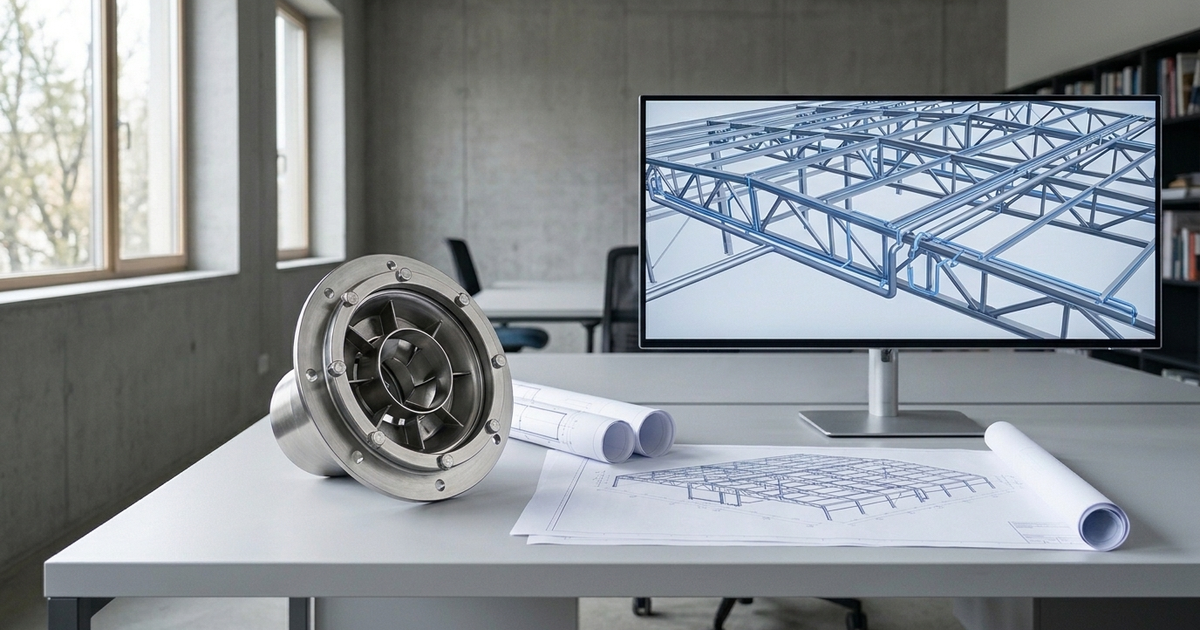
International industrial investors, EPC contractors, and MEP consultants building in Vietnam and Southeast Asia frequently encounter two benchmark references when specifying siphonic roof drainage: EN 12056-3 and ASME A112.6.9. Although both frameworks govern the safe removal of rainwater from large-span roofs using full-bore negative-pressure flow, they address different layers of system design and component qualification. Understanding how EN 12056-3 and ASME A112.6.9 complement each other enables project teams to write clear technical specifications without ambiguity. To review the hydraulic fundamentals applied by Siphonet, explore [Siphonet siphonic roof drainage technology](/technology).
Scope and Engineering Focus of EN 12056-3
EN 12056-3 is the European standard governing gravity drainage systems inside buildings, specifically Part 3 covering roof drainage layout and calculation, including dedicated provisions for siphonic roof drainage systems. For MEP engineers, EN 12056-3 serves as the primary system-level hydraulic design reference.
Under EN 12056-3, a siphonic roof drainage network is engineered as a complete, balanced hydraulic system rather than a collection of independent outlets. Designers model rainfall intensity, roof catchment geometry, outlet priming behavior, full-bore pipe velocities, friction losses, and negative operating pressures across every branch and collector to ensure stable siphon formation and safe discharge into the downstream drainage network. Siphonet delivers EN 12056-3 siphonic roof drainage systems featuring a 15 mm full-bore priming depth and a 0% horizontal collector slope, consolidating downpipes by up to 80%.
Scope and Component Focus of ASME A112.6.9
ASME A112.6.9 is the American Society of Mechanical Engineers standard dedicated specifically to siphonic roof drains as engineered components. Rather than replacing full-network hydraulic simulation, ASME A112.6.9 establishes material, structural, and laboratory performance requirements for siphonic roof outlets—verifying that each outlet excludes air effectively, primes reliably under design head, and maintains consistent hydraulic characteristics.
When multinational projects specify both EN 12056-3 and ASME A112.6.9, they combine rigorous component-level outlet qualification with comprehensive system-level hydraulic modeling. This dual-standard approach is particularly valuable for FDI manufacturing plants, aviation terminals, and logistics parks across Southeast Asia where corporate engineering guidelines reference both European and North American codes.
Aligning EN 12056-3 and ASME A112.6.9 in MEP Specifications
When drafting tender documents referencing EN 12056-3 and ASME A112.6.9, consultants should align four core engineering deliverables:
- Certified roof outlet design: Specify anti-vortex stainless steel outlets—such as Siphonet's [SS316L anti-vortex and SS304 roof outlets, electrofusion HDPE PE100 piping, and anti-vibration rail systems](/products)—engineered to initiate full-bore priming at 15 mm water depth.
- Airtight piping and vibration restraint: Pair electrofusion PE100 HDPE collectors at a 0% slope with dedicated anti-vibration rail systems capable of maintaining alignment and absorbing hydraulic loads during storm surges.
- Validated hydraulic simulation and BIM: Require full hydraulic calculation reports and BIM models prepared through qualified [siphonic hydraulic design, simulation, and commissioning services](/services) before procurement begins.
- Project-specific code clauses: Exact local rainfall intensity return periods, allowable negative-pressure thresholds, minimum flow velocities, and emergency overflow provisions depend on local building regulations and roof geometry; all project-specific calculation criteria and clause interpretations require confirmation by Siphonet engineers.
Proven Dual-Standard Performance on Mega-Span Roofs
Applying EN 12056-3 and ASME A112.6.9 disciplines yields measurable structural and financial advantages on large roofs. Siphonet's published benchmarks document 20% Capex savings, approximately 30% total savings, up to 80% downpipe consolidation, and up to 50% peak storm runoff reduction, alongside a documented client case eliminating 76% of internal downpipes on a 42,000 m² roof.
These standards underpin Siphonet's [reference projects across Vietnam](/projects), including VinFast Vung Ang Phase 2 (150,000 m², 200–300 L/s per line), LEGO Manufacturing Vietnam (150,000 m²), Huali Flooring in Thai Nguyen (80,000 m², 200–250 L/s per line), Suntory PepsiCo Long An (70,000 m², 200–300 L/s per line), Hinro Soju in Hung Yen (25,000 m², 150–200 L/s per line), and Noi Bai T2 Expansion (20,000 m²). Engineers can access BIM files and technical guidance in the [Siphonet Engineers Hub](/engineers-hub).
Align Your Project Specification with Siphonet Engineers
To ensure your roof drainage specification harmonizes EN 12056-3 and ASME A112.6.9 with local project conditions, partner with SIPHONET JOINT STOCK COMPANY (Tax code 0111350715, N07-B1 Dich Vong, Cau Giay, Hanoi, Vietnam). Connect with our engineering specialists via [request siphonic hydraulic design](/contact-engineering), call +84 913 381 683, or email siphonet@gmail.com.





