跳转至主要工程内容
SIPHNET
返回全部技术文章
虹吸工程设计指南3 分钟阅读2026-11-24

Siphonet虹吸式雨水斗布置原则与间距:最小1米、最大30米及安全备用

Siphonet虹吸式雨水斗布置的4条黄金原则:固定低点流量校验、最大间距30米、最小间距1米(含应急溢流系统),以及严禁安装单个孤立雨水斗的规则。

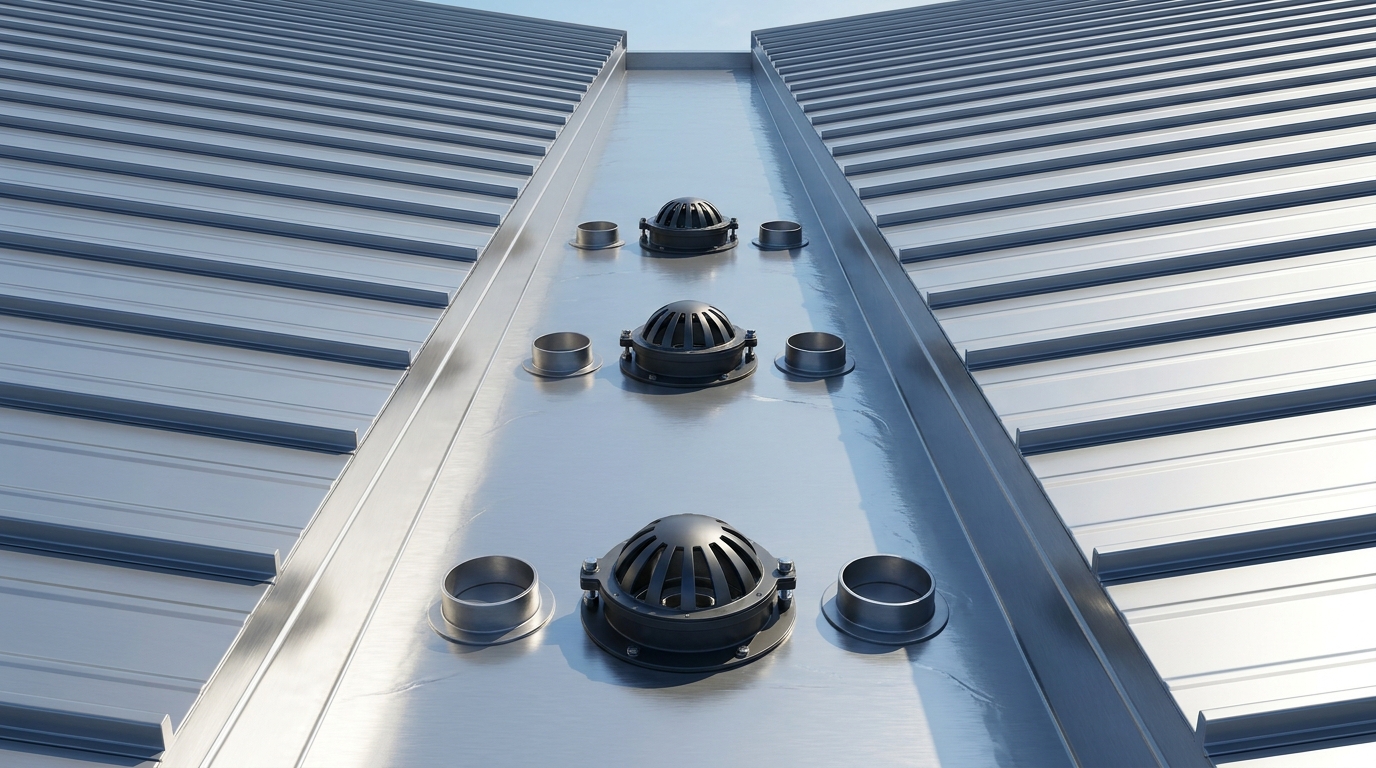
大跨度厂房不锈钢报天沟沿线主Siphonet虹吸式雨水斗及应急溢流雨水斗均匀布置3D透视
图1:大跨度厂房不锈钢箱形天沟沿线主Siphonet虹吸式雨水斗及应急溢流雨水斗的均匀布置。

1. 决定虹吸雨水斗位置的四(04)个核心要素

在完成各屋面分区的降雨量计算并选定合适的Siphonet雨水斗型号(14 l/s或65 l/s)后,轴测图绘制的下一步是确定天沟或平屋面上雨水斗的数量和坐标。符合Siphonet技术标准的标准化雨水斗布置方案必须同时平衡以下4个参数:

  1. 屋面不同分区所需的雨水排水流量(l/s)。
  2. 已选雨水斗型号能够满足的最大排放流量。
  3. 屋面雨水斗之间的最大允许间距(最大30米)。
  4. 屋面雨水斗之间的强制最小间距(最小1米)。

2. 情况1:雨水斗位置被强制固定(强制位置)

对于许多已经划分网格并预先形成倒金字塔坡度的钢筋混凝土屋面,或已经存在结构楼板穿孔开洞(过梁预留坑)的改造工程,雨水斗的安装坐标将强制固定在这些最低的低点。

在这种情况下,Siphonet设计工程师必须执行反向验证程序:

  • 精确测量流向每个固定开洞点的实际坡度子集水面积。
  • 计算每个低点产生的局部流量(Q点)。
  • 直接与所选雨水斗的最大排放能力进行比较,以确认条件Q斗, max ≥ Q点。
  • 如果某个子集水面积过大导致Q点超过单个14 l/s雨水斗的能力,工程师必须强制升级到65 l/s的大流量雨水斗或扩大集水坑以安装第二个雨水斗(遵守最小1米间距)。

3. 情况2:天沟与屋面不受限制 — 最大30米规则

在轻钢结构厂房的屋面上,如果天沟连续延伸(50米、100米甚至200米)且不受开洞位置的约束,黄金法则是将雨水斗沿天沟长度或屋面方向均匀分布,相邻两个雨水斗之间的最大间距不超过30米(且最外侧雨水斗至天沟端部封板的距离不超过15米)。

为什么即使雨水斗流量有富余,间距也不能超过30米?

雨水在天沟内部流动时属于受天沟壁摩擦影响的明渠流。如果两个雨水斗相距40-50米,为了推动水流移动20-25米的距离到达雨水斗斗口,天沟中点的水位将必须升得非常高(产生较大的水力自由面坡度)。其后果是:

  • 增加了天沟跨中集中的静水荷载,容易导致天沟支撑梁下挠以及硅胶接缝/天沟焊接处开裂。
  • 水位上升触及屋面彩钢瓦板的下唇边,由于毛细现象或风吹导致渗水进入厂房内部。
  • 延长了水流向雨水斗汇聚的时间,减缓了虹吸真空引水过程。

4. 强制安全规则:沟槽区段内不得仅布置1个雨水斗

缺乏经验的削减成本图纸中有时会出现的一个严重错误是,在一个短的封闭天沟段内仅布置01个雨水斗(例如长18米、总流量仅10 l/s、小于单个雨水斗14 l/s容量的天沟)。

⚠️ 不推荐的配置(Configuration Not Recommended):

出于防堵塞安全原因,绝对禁止在封闭天沟段内仅布置1个孤立的雨水斗。只需一个塑料袋、工业包装碎片或风吹落叶遮挡住这唯一的雨水斗斗口,整个天沟区段就会变成蓄水池并直接漫溢进入厂房内部。

根据Siphonet的设计安全标准,每个独立的天沟区段强制必须至少有02个雨水斗(均匀分布在天沟长度的1/4和3/4位置处),并结合独立的应急溢流系统,以确保在所有实际运行场景下的N+1冗余。

5. 最小1米间距规则(适用于主系统及应急溢流系统)

相反,当雨水斗布置得比较近时(例如在大天沟中部并排布置两个大流量雨水斗,或者将应急溢流系统的雨水斗紧挨着主排水系统的雨水斗布置),任意两个雨水斗之间的中心距强制必须大于或等于1.0米(最小1米)。

最小1米规则的水力学基础:

  • 当虹吸式雨水斗引发真空时,它会产生一个强烈的向心吸水区(降雨漏斗曲线),使周围的水位局部降低。
  • 如果两个雨水斗紧密靠在小于1米的位置,两个雨水斗将“争夺”同一团水体,导致吸水区相互干扰,降低涡流阻挡盘上的水封深度。
  • 其结果是空气被吸入两个雨水斗中,破坏了满管流,导致管道振动并降低主系统和应急溢流系统的整体排水性能。

6. Siphonet雨水斗布置规则快速汇总表

雨水斗布置参数Siphonet标准值技术目的
2个雨水斗之间的最大间距≤ 30米(均匀)限制天沟中间的水位上升深度,减轻屋面荷载并缩短集水时间。
末端雨水斗至天沟封板的距离≤ 15米平衡最外侧雨水斗两侧的集水流域。
任意2个雨水斗之间的最小间距≥ 1.0米避免水力紊乱和抽吸区竞争(适用于主斗与应急溢流斗对)。
封闭天沟段的最少雨水斗数量≥ 2个雨水斗针对垃圾、树叶或飞散物引起的局部堵塞提供安全备用。

7. 结论

严格遵守最小1米 – 最大30米 – 每条天沟最少2个雨水斗的规则集,不仅能使Siphonet虹吸式雨水排水系统达到稳定的设计流量,还能在实际运行风险面前保护屋面结构的安全。在确定雨水斗位置之后的下一步是绘制空间轴测管道走向——该内容将在第5篇文章中进行深入分析。


#Bố trí phễu thu#Khoảng cách 30m#Khoảng cách 1m#Xả tràn khẩn cấp#Siphonet

虹吸工程设计指南

同栏目相关技术文章

探索「虹吸工程设计指南」栏目下的更多专业工程指南

查看本栏目全部文章
Sponge City Policy Alignment for Southeast Asian Eco-Industrial Parks
虹吸工程设计指南3 分钟阅读

Sponge City Policy Alignment for Southeast Asian Eco-Industrial Parks

Sponge City policy alignment for Southeast Asian eco-industrial parks requires industrial developers to control peak stormwater runoff, expand on-site retention, and integrate sustainable urban drainage systems (SuDS). EN 12056-3 siphonic roof drainage supports these mandates by reducing peak storm

阅读全文
Real-Time Rainfall Monitoring and Predictive Maintenance for Siphonic Roof Networks
虹吸工程设计指南3 分钟阅读

Real-Time Rainfall Monitoring and Predictive Maintenance for Siphonic Roof Networks

Real-time rainfall monitoring and predictive maintenance for siphonic roof networks keep EN 12056-3 mega-roofs operating at peak 6–8 m/s self-cleaning capacity before tropical cloudbursts strike. By combining gutter water-level sensors, scheduled leaf-guard cleaning, and clamp-ring inspections, indu

阅读全文
Port and Container Terminal Warehouse Drainage Under Salt-Spray Exposure
虹吸工程设计指南3 分钟阅读

Port and Container Terminal Warehouse Drainage Under Salt-Spray Exposure

Port and container terminal warehouse drainage under salt-spray exposure requires marine-grade corrosion resistance and high-capacity storm evacuation. By combining SS316L anti-vortex roof outlets with electrofusion PE100 HDPE piping, EN 12056-3 siphonic systems eliminate internal downpipes in high-

阅读全文
Mekong Delta & Southern Vietnam Industrial Flood Resilience with Siphonic Roofs
虹吸工程设计指南3 分钟阅读

Mekong Delta & Southern Vietnam Industrial Flood Resilience with Siphonic Roofs

Mekong Delta and Southern Vietnam industrial flood resilience depends on rapid roof evacuation and controlled perimeter discharge during overlapping monsoon cloudbursts and high tides. EN 12056-3 siphonic roof drainage primes at 15 mm water depth, consolidates up to 80% of downpipes, and reduces pea

阅读全文
Siphonic Drainage for Distilleries and Compact Process Plants: Hinro Soju 25,000 m²
虹吸工程设计指南3 分钟阅读

Siphonic Drainage for Distilleries and Compact Process Plants: Hinro Soju 25,000 m²

Siphonic drainage for distilleries and compact process plants—proven on the 25,000 m² Hinro Soju facility in Hung Yen—delivers 150–200 L/s per collector line while keeping dense fermentation and bottling halls free of internal downpipes. Using 0%-slope PE100 HDPE piping and SS316L/SS304 anti-vortex

阅读全文
Closed-Loop Rainwater Harvesting for Textile Dyeing and Finishing Factories
虹吸工程设计指南3 分钟阅读

Closed-Loop Rainwater Harvesting for Textile Dyeing and Finishing Factories

Closed-loop rainwater harvesting for textile dyeing and finishing factories captures clean roof runoff through 0%-slope EN 12056-3 siphonic collectors to offset high municipal process-water consumption. By consolidating up to 80% of downpipes into centralized treatment cisterns, textile plants reduc

阅读全文



