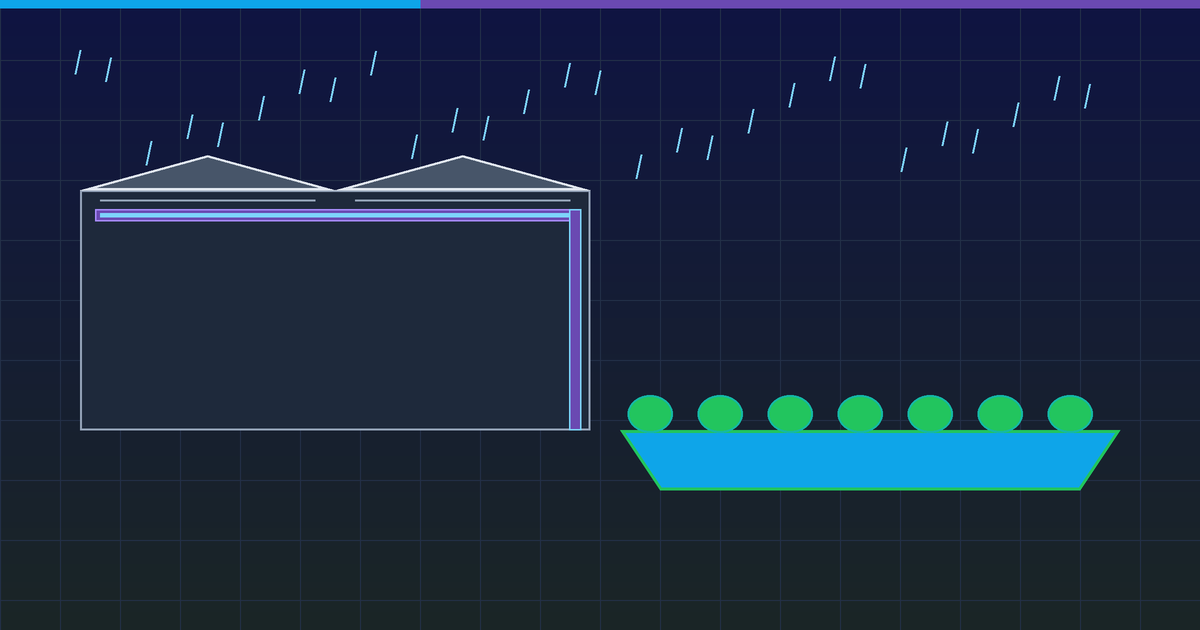
Blue-green industrial corridors pair high-capacity EN 12056-3 siphonic roof drainage with vegetated bioswales and detention basins to create flood-resilient Sponge City industrial parks. By consolidating up to 80% of downpipes at a 0% collector slope and reducing peak storm runoff by up to 50%, factories feed surface green infrastructure cleanly without overwhelming underground sewers.
Connecting Mega-Roofs to Sponge City Green Infrastructure
Modern eco-industrial parks across Southeast Asia are shifting away from concrete-only storm sewers toward Sponge City principles—combining "blue" engineered drainage with "green" vegetated retention. However, conventional gravity roof drainage scatters dozens of perimeter downpipes around a building, making it difficult and expensive to route roof runoff into centralized bioswales.
An EN 12056-3 siphonic system solves this bottleneck. By operating at a 0% horizontal slope inside sealed PE100 HDPE pipes, siphonic collectors gather stormwater from 50,000–150,000 m² roofs and direct it to a handful of consolidated perimeter discharge points—ideal for feeding Sponge City industrial park masterplans.
How Siphonic Discharge Integrates with Vegetated Bioswales
- Rapid Roof Evacuation: SS316L/SS304 anti-vortex outlets prime at a 15 mm water depth, preventing roof ponding during intense tropical cloudbursts.
- Consolidated Perimeter Delivery: Up to 80% fewer downpipes mean runoff is delivered to designated forebays and stilling chambers rather than eroding landscaped edges.
- Controlled Detention & Bio-Filtration: Buffered roof water enters vegetated bioswales and retention zones, slowing peak discharge by up to 50% and filtering particulates before municipal release.
Blue-Green Corridor Performance: Siphonic + Bioswale vs. Conventional
| Corridor Design Metric | Siphonic Roof + Bioswale Corridor | Conventional Gravity + Concrete Drain | |---|---|---| | Roof-to-Swale Tie-In Points | Up to 80% fewer discharge risers | Numerous scattered perimeter pipes | | Peak Storm Runoff Reduction | Up to 50% peak flow attenuation | High-velocity surge into storm sewers | | Underground Trenching | Up to 80% excavation reduction | Extensive buried concrete pipework | | Collector Slope & Space | 0% horizontal slope overhead | 1%–2% slope; space-consuming | | Total Drainage Cost Impact | 20% Capex savings; ~30% total savings | Higher civil & stormwater detention cost |
Building Climate-Resilient Industrial Campuses
As industrial developers pursue net-zero and green campus benchmarks—such as the 150,000 m² LEGO Manufacturing Vietnam facility—integrating Siphonet turnkey engineering with blue-green landscape corridors delivers measurable flood resilience and lifecycle savings.
Explore our Stormwater Solutions or review completed industrial projects in our Projects Portfolio.
Frequently Asked Questions
How do siphonic roof drains support vegetated bioswales in industrial parks?
Siphonic systems consolidate up to 80% of downpipes into a few strategic perimeter discharge points, allowing engineers to route clean roof runoff into forebays and bioswales rather than building costly underground collector sewers around the entire factory.
Won't high-velocity siphonic discharge erode a vegetated bioswale?
No, provided standard hydraulic transition chambers or riprap forebays are installed at the downpipe base to dissipate the 6–8 m/s pipe velocity into calm open-channel flow before water enters the vegetated swale.
What cost savings can industrial developers expect from this integrated approach?
EN 12056-3 siphonic roof drainage delivers 20% Capex savings and approximately 30% total drainage savings, while reducing underground storm excavation by up to 80%.
Request a Complimentary Siphonic Hydraulic Review SIPHONET JOINT STOCK COMPANY (Tax Code: 0111350715) N07-B1 Dich Vong, Cau Giay, Hanoi, Vietnam | Tel: +84 913 381 683 Email: siphonetjsc@gmail.com | moitruongnuoc@gmail.com | Web: https://www.siphonet.com/contact-engineering





