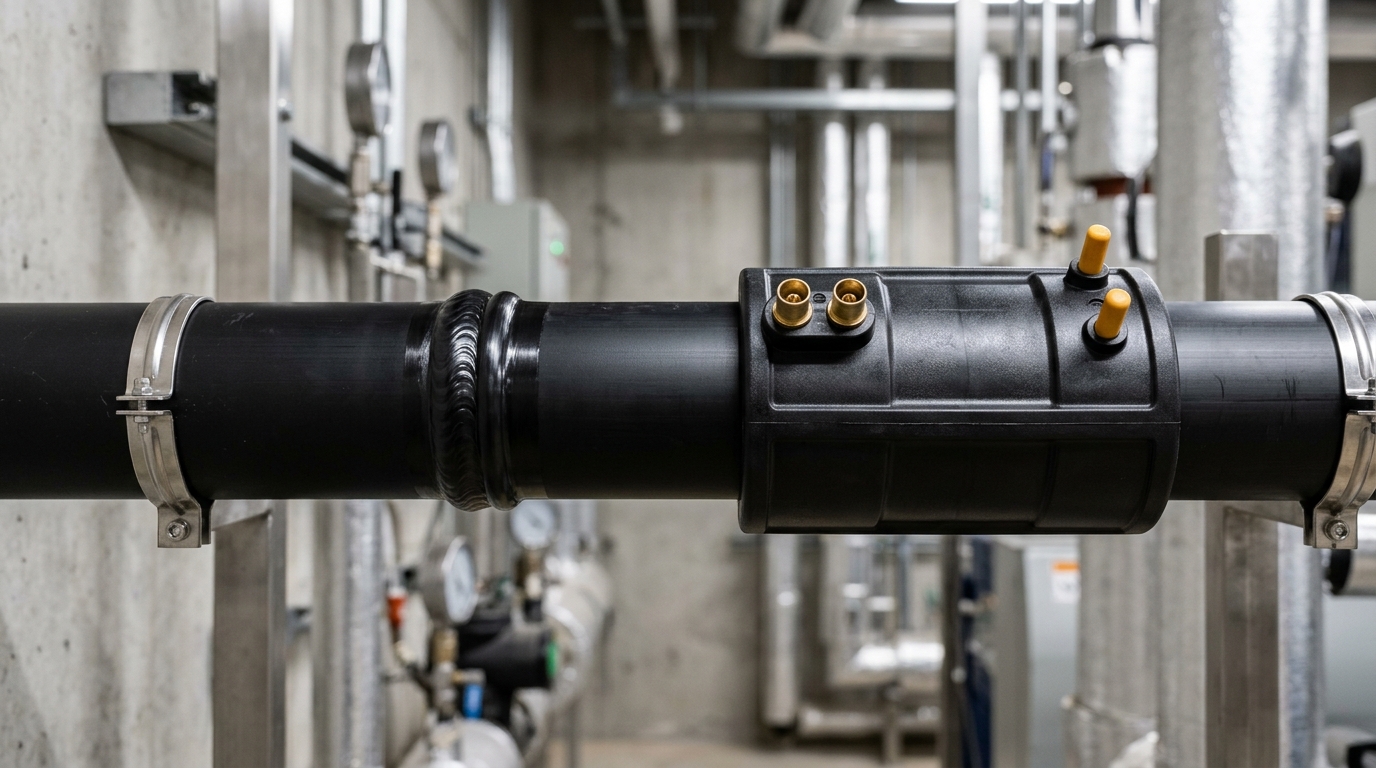
1. Why Airtight Joint Integrity Is Non-Negotiable in Siphonic Systems
In a gravity drainage pipe, a tiny pinhole leak at a rubber push-fit joint might only drip slightly during heavy rain. In a Siphonet Siphonic Drainage System, every joint operates under intense negative pressure (down to -800 mbar) during peak storms and positive hydrostatic pressure near the stack base. Even a microscopic gap or cold weld will aggressively suck ambient air into the collector under vacuum, instantly collapsing full-bore siphonic action across the entire roof zone — or spray pressurized water onto sensitive factory equipment below.
For this reason, Siphonet networks strictly forbid rubber push-fit sockets on pressurized runs and exclusively use homogeneous thermal fusion: Butt Fusion Welding and Electrofusion Welding in compliance with DVS 2207.
2. Visual & Mechanical QA/QC Inspection of Butt Fusion Welds
When inspecting butt-welded PE100 HDPE joints on site, QA/QC engineers examine the external double weld bead (rollover ridge) around the full 360° circumference:
- PASS (Acceptable Butt Weld): A continuous, smooth, symmetrical double bead evenly rolled back onto both pipe surfaces; uniform width and height all around the circumference; zero axial step/misalignment between joined pipes; glossy clean polymer texture with no burned streaks, pores, or trapped grit.
- REJECT (Defective Butt Weld): Asymmetric or single-sided bead (indicating uneven heating or misaligned clamping), sharp V-notch crevice dipping below the pipe outer wall (insufficient fusion pressure or cold joint), excessive axial offset (>10% of wall thickness), or charred/cracked bead surface. Every rejected butt weld must be cut out completely and re-welded.
3. Inspecting Electrofusion Couplers & the Thermal Fusion Detector
Electrofusion couplings are widely used at overhead tie-ins, repair spools, and fixed anchor points. Proper execution requires scraping away the oxidized outer skin of the HDPE pipe, degreasing with isopropyl alcohol, marking full insertion depth, clamping rigidly to prevent movement during cooling, and scanning the barcode into a calibrated electrofusion processor.
Crucial Visual Verification — The Fusion Indicator (Detector): Modern Siphonet-approved electrofusion fittings incorporate an integrated thermal fusion detector window or pop-up pin. If the thermal detector does not change color (for example, failing to transition completely from white to black) or fails to rise to its completed position, it means the welding procedure was interrupted or did not complete properly. Such joints must be strictly rejected and replaced — never re-welded blindly without manufacturer protocol verification.
4. Final Hydrostatic & Airtight Commissioning Test
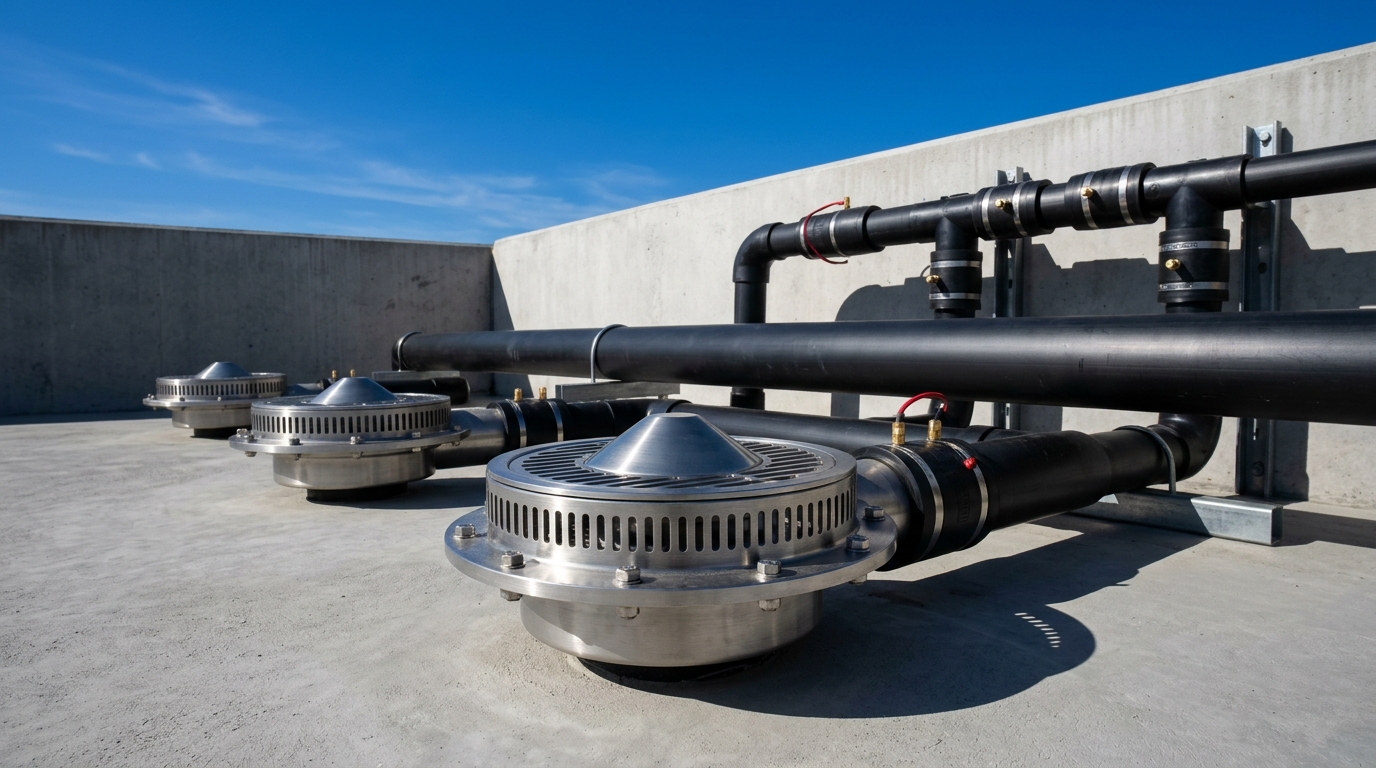
Before closing ceilings or signing off handover, Siphonet recommends isolating completed piping sections and performing a controlled hydrostatic water tightness test (typically 0.3 to 0.5 bar for at least 30 minutes) along with a 100% visual sign-off checklist of every butt weld, electrofusion detector, anchor point, and roof outlet clamping flange.