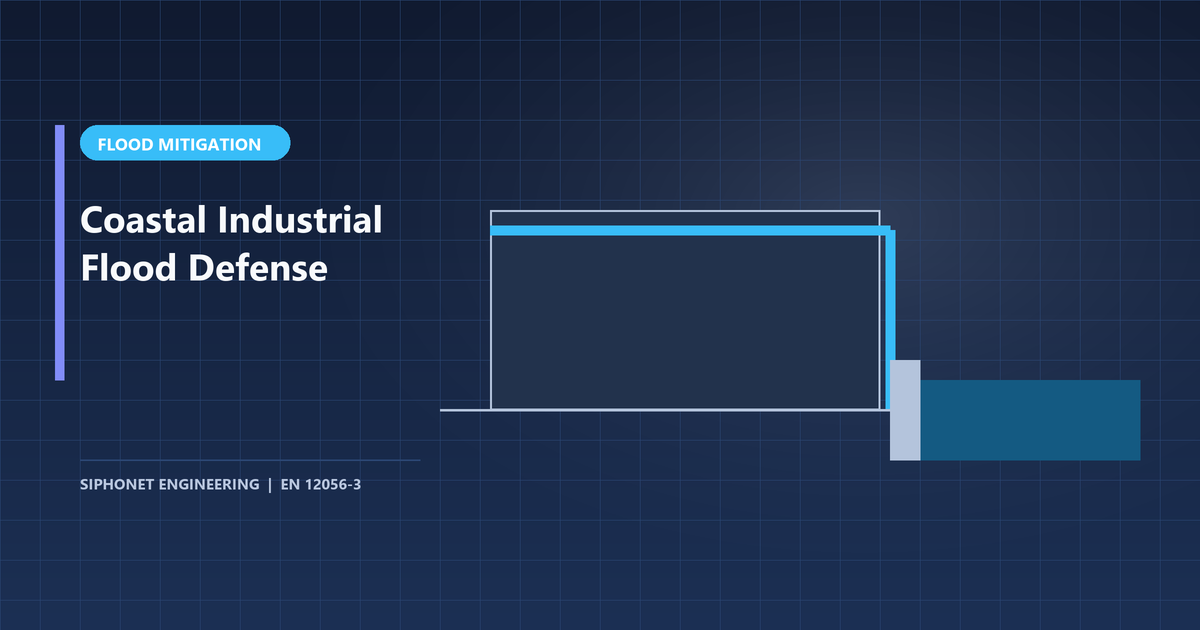
Coastal industrial parks face compounding flood risks when intense monsoon storms coincide with high tides, surcharging underground storm sewers. EN 12056-3 siphonic roof drainage consolidates up to 80% of downpipes into controlled perimeter outfalls and reduces peak storm runoff by up to 50%, relieving sub-grade sewer pressure.
The Dual Threat of High Tides and Extreme Monsoon Storms
Industrial zones and port logistics hubs along Southeast Asia's coastline sit at low elevations where municipal outfall canals experience tidal backwater. When heavy rainfall hits during high tide, conventional gravity roof networks—with dozens of scattered ground-level tie-ins—rapidly surcharge buried storm pipes, causing yard flooding and loading-dock downtime.
Consolidating Tie-Ins and Cutting Peak Runoff by Up to 50%
By replacing scattered gravity downpipes with Siphonet EN 12056-3 siphonic drainage, facilities consolidate up to 80% of vertical risers into centralized perimeter discharge points. Routing these consolidated mains into engineered attenuation chambers or buffered outfalls cuts peak storm runoff by up to 50%.
Coastal Corrosion Protection with SS316L and PE100 HDPE
Salt-laden coastal air rapidly corrodes cast iron pipes and standard fasteners. Siphonet specifies SS316L anti-vortex roof outlets paired with corrosion-proof electrofusion PE100 HDPE piping and engineered anti-vibration rail systems for long-term coastal durability.
Coastal Flood Mitigation Comparison
| Coastal Drainage Parameter | Siphonic System + Buffering | Conventional Gravity Network | |---|---|---| | Peak Storm Runoff Impact | Up to 50% peak flow reduction | Direct unattenuated surge | | Ground Sewer Connections | Up to 80% fewer tie-ins | Dense sub-slab & perimeter tie-ins | | Roof Priming & Evacuation | 15 mm priming depth; 0% collector slope | Slower open-channel drainage | | Salt-Spray Corrosion Resistance | SS316L outlets & PE100 HDPE | Susceptible to coastal rust & joint leaks | | Project Cost Impact | 20% Capex savings; ~30% total savings | Expensive deep-trench concrete sewers |
Supporting Resilient Coastal Manufacturing
From deep-water industrial zones to 150,000 m² coastal manufacturing plants, Siphonet's Engineering Services team models hydraulic balance and outfall interfaces to keep facilities operational through extreme coastal weather.
Frequently Asked Questions
How does siphonic drainage help prevent underground sewer surcharge in coastal parks?
Consolidating up to 80% of downpipes into centralized, buffered perimeter outfalls—paired with attenuation storage—reduces peak storm runoff by up to 50% during tidal backwater events.
Which roof outlet material is best for coastal industrial parks?
SS316L stainless steel anti-vortex outlets are recommended for coastal zones due to their superior resistance to chloride pitting and salt spray.
Does siphonic drainage reduce underground excavation in high-water-table coastal soils?
Yes. Eliminating internal downpipes and sub-slab gravity trenches significantly reduces deep excavation in soft coastal soils, contributing to 20% Capex savings.
Build Coastal Flood Resilience into Your Industrial Facility SIPHONET JOINT STOCK COMPANY (Tax Code: 0111350715) N07-B1 Dich Vong, Cau Giay, Hanoi, Vietnam | Tel: +84 913 381 683 Email: siphonetjsc@gmail.com | moitruongnuoc@gmail.com | Web: https://www.siphonet.com/contact-engineering





