Skip to main engineering content
SIPHNET
All Technical Articles
Engineering Guide2 min read2026-11-20

Siphonet Siphonic Drainage Ecosystem: Integrated Engineering Under EN 12056-3

How Siphonet Industrial, Siphonet Building, Siphonet Infrastructure, and Siphonet Material operate as one integrated hydraulic engineering platform across Asia.

One Hydraulic Core, Four Specialized Engineering Divisions

Large-span roofs do not share identical structural, acoustic, or rainfall constraints. An automated semiconductor cleanroom requires zero interior downpipes and vibration-free overhead collectors, whereas an international airport terminal must evacuate 250+ mm/h typhoon cloudbursts across sweeping curved trusses.

The Siphonet EcoSystem organizes our engineering, certified materials, and field execution into four specialized divisions — all governed by a single full-bore negative-pressure hydraulic engine compliant with EN 12056-3 and ASME A112.6.9.
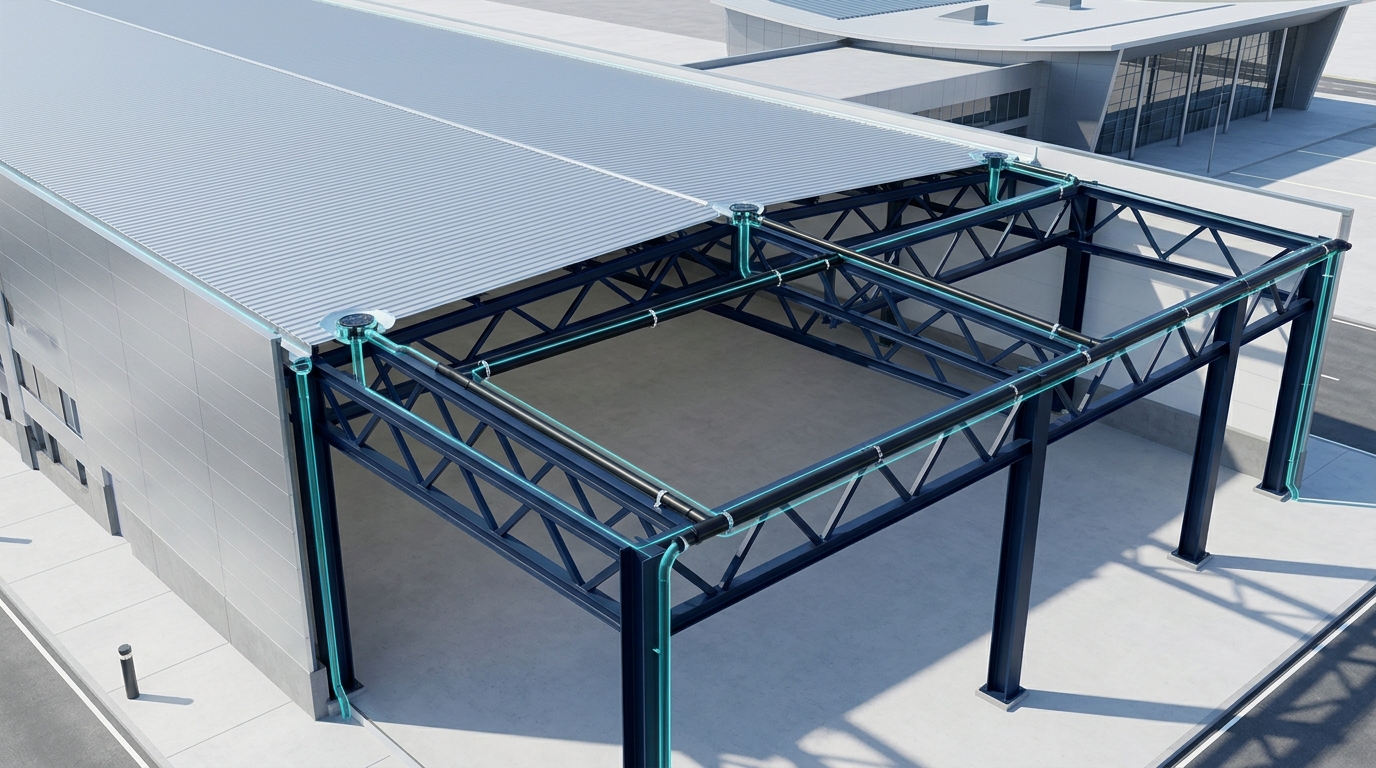
Siphonet EcoSystem architectural hydraulic cutaway
Siphonet EcoSystem architectural overview: anti-vortex roof outlets feeding 0%-slope PE100 HDPE horizontal collectors and perimeter risers.

How the Four Divisions Work Together

Division Primary Building Typologies Core Engineering Advantage
Siphonet Industrial EV Gigafactories, Semiconductor Fabs, Logistics Warehouses Zero interior downpipes, 0% overhead slope, uninterrupted AGV floorplates
Siphonet Building Shopping Malls, Hospitals, High-Rise Podiums, Convention Centers Saves 450–850 mm ceiling plenum height, acoustic & condensation control
Siphonet Infrastructure Airport Terminals, MRO Hangars, Stadiums, Rail & Metro Stations Typhoon-rated 150–300+ mm/h capacity, wide-span truss integration
Siphonet Material All Siphonic Projects & OEM Partners 304/316L anti-vortex outlets, EN 12201 PE100 HDPE, steel rail-anchoring
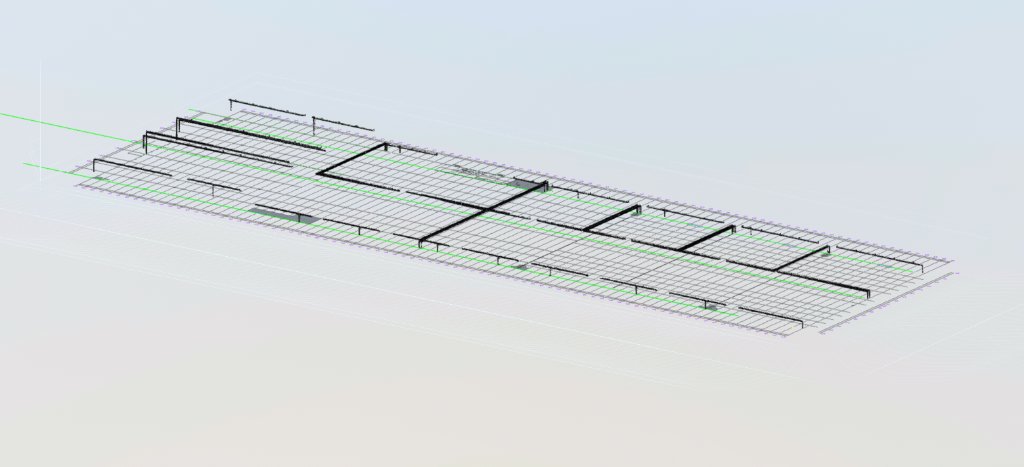
3D BIM Isometric Siphonic Pipe Network
Full 3D BIM hydraulic isometric model validating negative-pressure balance (-10 to -80 kPa) prior to site prefabrication.

From BIM Digital Twin to Hydrostatic Commissioning

Every project within the Siphonet EcoSystem follows a deterministic 4-stage delivery protocol: (1) IDF storm-intensity modeling, (2) 3D Revit/BIM clash-free pipe routing with rail-anchoring calculations, (3) electrofusion PE100 prefabrication, and (4) full hydrostatic & vacuum commissioning prior to handover.


#siphonet-ecosystem#en-12056-3#bim#pe100-hdpe

Engineering Guide

Related Articles in This Category

Explore more engineering articles in Engineering Guide

View all in category
Sponge City Policy Alignment for Southeast Asian Eco-Industrial Parks
Engineering Guide3 min read

Sponge City Policy Alignment for Southeast Asian Eco-Industrial Parks

Sponge City policy alignment for Southeast Asian eco-industrial parks requires industrial developers to control peak stormwater runoff, expand on-site retention, and integrate sustainable urban drainage systems (SuDS). EN 12056-3 siphonic roof drainage supports these mandates by reducing peak storm

Read article
Real-Time Rainfall Monitoring and Predictive Maintenance for Siphonic Roof Networks
Engineering Guide3 min read

Real-Time Rainfall Monitoring and Predictive Maintenance for Siphonic Roof Networks

Real-time rainfall monitoring and predictive maintenance for siphonic roof networks keep EN 12056-3 mega-roofs operating at peak 6–8 m/s self-cleaning capacity before tropical cloudbursts strike. By combining gutter water-level sensors, scheduled leaf-guard cleaning, and clamp-ring inspections, indu

Read article
Port and Container Terminal Warehouse Drainage Under Salt-Spray Exposure
Engineering Guide3 min read

Port and Container Terminal Warehouse Drainage Under Salt-Spray Exposure

Port and container terminal warehouse drainage under salt-spray exposure requires marine-grade corrosion resistance and high-capacity storm evacuation. By combining SS316L anti-vortex roof outlets with electrofusion PE100 HDPE piping, EN 12056-3 siphonic systems eliminate internal downpipes in high-

Read article
Mekong Delta & Southern Vietnam Industrial Flood Resilience with Siphonic Roofs
Engineering Guide3 min read

Mekong Delta & Southern Vietnam Industrial Flood Resilience with Siphonic Roofs

Mekong Delta and Southern Vietnam industrial flood resilience depends on rapid roof evacuation and controlled perimeter discharge during overlapping monsoon cloudbursts and high tides. EN 12056-3 siphonic roof drainage primes at 15 mm water depth, consolidates up to 80% of downpipes, and reduces pea

Read article
Siphonic Drainage for Distilleries and Compact Process Plants: Hinro Soju 25,000 m²
Engineering Guide3 min read

Siphonic Drainage for Distilleries and Compact Process Plants: Hinro Soju 25,000 m²

Siphonic drainage for distilleries and compact process plants—proven on the 25,000 m² Hinro Soju facility in Hung Yen—delivers 150–200 L/s per collector line while keeping dense fermentation and bottling halls free of internal downpipes. Using 0%-slope PE100 HDPE piping and SS316L/SS304 anti-vortex

Read article
Closed-Loop Rainwater Harvesting for Textile Dyeing and Finishing Factories
Engineering Guide3 min read

Closed-Loop Rainwater Harvesting for Textile Dyeing and Finishing Factories

Closed-loop rainwater harvesting for textile dyeing and finishing factories captures clean roof runoff through 0%-slope EN 12056-3 siphonic collectors to offset high municipal process-water consumption. By consolidating up to 80% of downpipes into centralized treatment cisterns, textile plants reduc

Read article