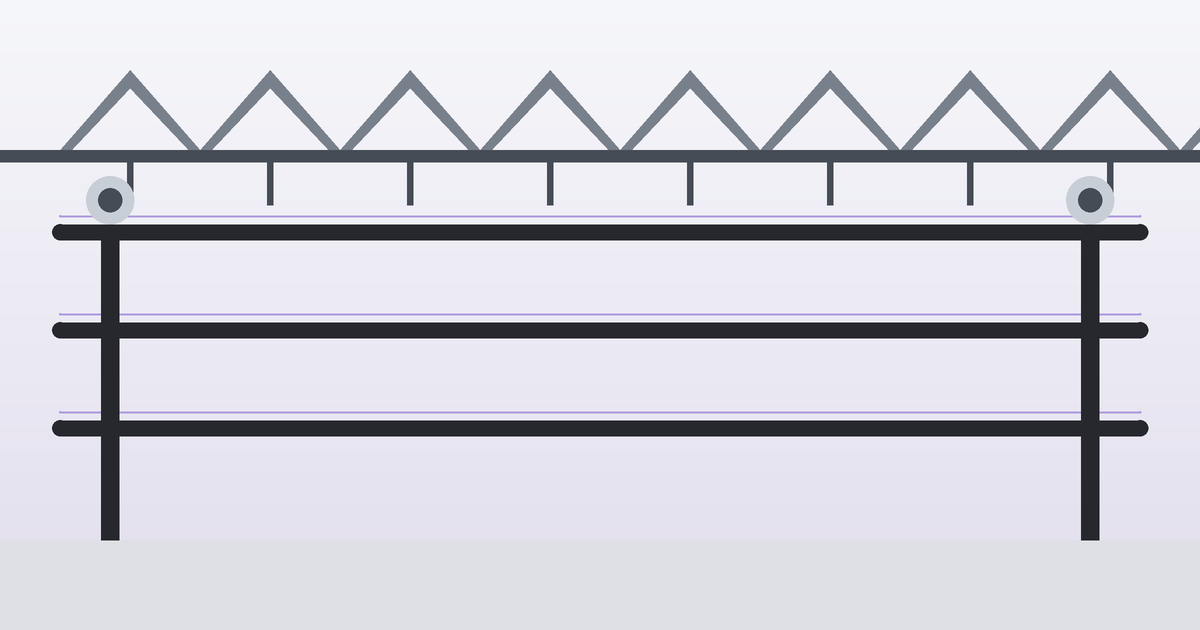
Mega factories and logistics hubs depend on large, unobstructed floor plates, dense overhead services, and fast removal of storm water during intense tropical rainfall. Conventional gravity roof drainage requires horizontal collectors laid at a fall, and on wide spans that fall carries pipes lower and lower across the roof. Zero-slope roof drainage, engineered to EN 12056-3 and ASME A112.6.9, takes a different approach: the collector runs level at 0% slope and the system operates under full-bore siphonic flow. SIPHONET JOINT STOCK COMPANY supplies the outlets, electrofusion PE100 HDPE piping and anti-vibration rails for these roofs, together with hydraulic design support for each project.
Why Mega Factories and Logistics Hubs Require Zero-Slope Roof Drainage
Industrial roofs of 70,000 to 150,000 m² are part of Siphonet's published reference portfolio. Under gravity drainage, every metre of collector fall lowers the pipe further into the building. Designers then add vertical downpipes, underground collection trenches and floor penetrations to reach the storm network. Each of these elements limits clearance, racking layout and future production line changes.
Siphonic drainage changes the hydraulic basis. Once water in the roof gutter reaches a 15 mm priming depth at a roof outlet, the system fills the pipe and runs full-bore under negative pressure. The driving energy comes from the height difference between the roof gutter and the discharge point, so the horizontal collector does not need a gradient. This is why Siphonet's published collector slope is 0%.
Engineered Hardware for Level Siphonic Collectors
A level collector performs only when each part of the hydraulic loop is matched to the others. Siphonet's published hardware includes three main components:
- Roof outlets in SS316/SS304, including SS316L anti-vortex outlets, which are designed to prevent vortex formation as water enters the pipe network.
- Electrofusion HDPE piping (PE100), joined by electrofusion welding into continuous joints for negative-pressure operation.
- Anti-vibration rail systems that hold horizontal PE100 collectors to the roof structure while the system carries dynamic flow.
Siphonet also provides [hydraulic simulation, testing and BIM modelling](/technology), so collector routes can be coordinated with roof trusses and overhead MEP services before installation starts. Outlet spacing, pipe classes, fusion parameters and anchor loads depend on each project and must be confirmed by Siphonet hydraulic engineers.
Fewer Downpipes and Less Civil Scope
Siphonet's published results state that its siphonic systems eliminate pipe slopes, consolidate downpipes by up to 80%, deliver 20% Capex savings and about 30% total savings, and reduce peak storm runoff by up to 50%. A testimonial from a project with a 42,000 m² roof reports that 76% of internal downpipes were eliminated.
Fewer downpipes mean fewer penetrations through the floor slab and fewer vertical elements inside the production area. Where a project needs an underground connection or detention, the layout must be checked by Siphonet engineers against the local drainage network. This article does not calculate savings for any specific site.
Reference Projects and Flow Rates
Siphonet's published [reference projects](/projects) for industrial and logistics roofs include:
- VinFast Vung Ang Phase 2 (automotive & heavy industry): 150,000 m² roof area, 200–300 L/s per line.
- LEGO Manufacturing Vietnam (industrial & logistics): 150,000 m² roof area.
- Huali Flooring (Thai Nguyen) (industrial & logistics): 80,000 m² roof area, 200–250 L/s per line.
- Suntory PepsiCo Long An (food & beverage): 70,000 m² roof area, 200–300 L/s per line.
- Hinro Soju (Hung Yen) (food & beverage): 25,000 m² roof area, 150–200 L/s per line.
These figures are project references. Any new roof requires its own hydraulic design, which Siphonet's engineers prepare for the specific geometry, rainfall basis and layout.
Next Steps for Factory Developers and EPC Contractors
Project teams can review [drainage solutions for industrial roofs](/solutions) and Siphonet's [engineering services](/services). These cover hydraulic design and calculation, siphonic roof outlet and HDPE supply, and installation and commissioning. BIM and technical documents are available in the [engineer hub](/engineers-hub). To request a design review for a specific roof, use the [engineering contact form](/contact-engineering).
SIPHONET JOINT STOCK COMPANY (Tax code: 0111350715), N07-B1 Dich Vong, Cau Giay, Hanoi, Vietnam. Phone: +84 913 381 683. Email: siphonet@gmail.com. Website: siphonet.com.





