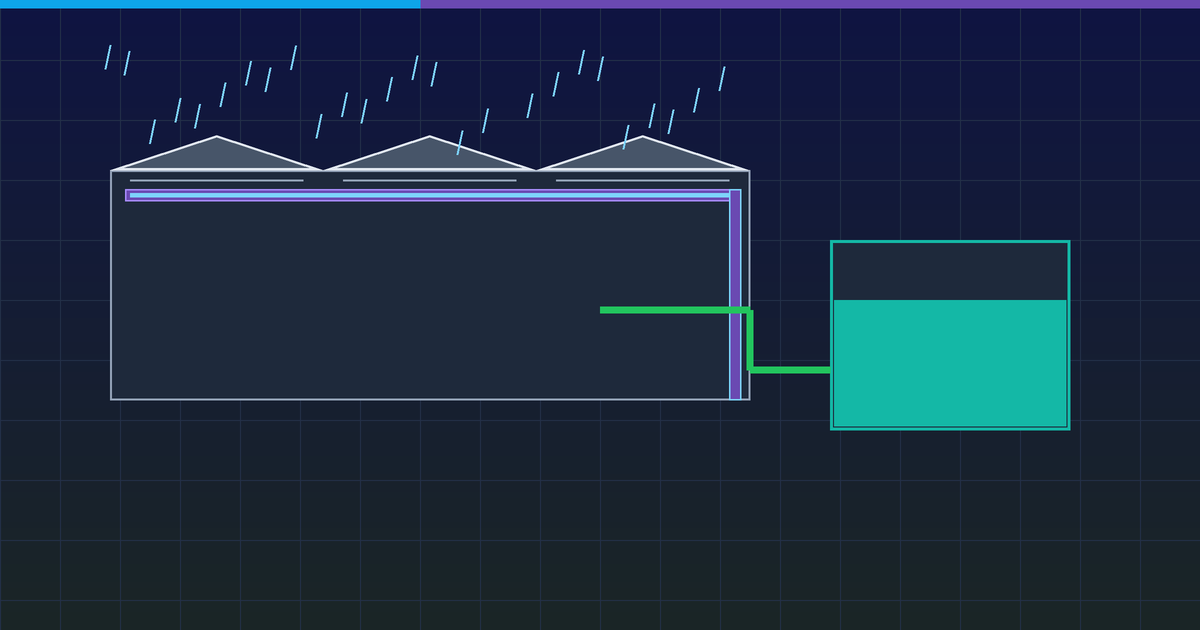
Closed-loop rainwater harvesting for textile dyeing and finishing factories captures clean roof runoff through 0%-slope EN 12056-3 siphonic collectors to offset high municipal process-water consumption. By consolidating up to 80% of downpipes into centralized treatment cisterns, textile plants reduce freshwater withdrawal, lower underground trenching costs, and strengthen buyer ESG compliance.
Why Textile Manufacturing Benefits from Siphonic Rainwater Capture
Textile dyeing, washing, and finishing operations are among the most water-intensive industrial processes in Southeast Asia. At the same time, textile factories typically occupy wide-span 25,000–100,000 m² roofs that shed massive volumes of low-turbidity rainwater during monsoon seasons.
Conventional gravity drainage scatters this resource across dozens of perimeter pipes, making centralized collection prohibitively expensive. Using industrial rainwater harvesting via siphonic roof collectors, textile facilities collect roof runoff overhead at a 0% slope and route it directly to first-flush separators and process-water storage tanks.
Engineering a Closed-Loop Roof-to-Process Water System
- Zero-Slope Overhead Collection: EN 12056-3 siphonic collectors in corrosion-free PE100 HDPE gather runoff across wide dye-house spans without obstructing overhead steam, chemical, or ventilation lines.
- Perimeter Consolidation: Up to 80% fewer downpipes feed directly into a single pre-filtration and first-flush chamber near the plant's water treatment station.
- Modular Storage & Treatment: Filtered rainwater supplements boiler feed, cooling towers, and fabric-washing stages—building on strategies outlined in modular rainwater storage for cooling.
Textile Plant Drainage & Reuse: Siphonic vs. Gravity
| Plant Engineering Metric | Siphonic Closed-Loop Collection | Conventional Gravity Collection | |---|---|---| | Collector Slope & Space | 0% horizontal slope overhead | 1%–2% slope; clashes with process MEP | | Downpipe Consolidation | Up to 80% fewer risers to cistern | Many scattered risers; high trench cost | | Pipe Hygiene & Longevity | Smooth PE100 HDPE (50-year design life) | Rust or sediment buildup in slow drains | | Priming & Storm Safety | 15 mm priming depth; 6–8 m/s velocity | Higher ponding risk during cloudbursts | | Capex & Total Project Impact | 20% Capex savings; ~30% total savings | Expensive buried collection network |
Supporting Global Apparel Sustainability Mandates
International apparel brands increasingly audit textile suppliers on freshwater intensity and stormwater resilience. Deploying Siphonet turnkey siphonic engineering protects factory roofs from monsoon overload while delivering a clean, centralized rainwater feed for closed-loop industrial reuse.
Explore our Rainwater & Stormwater Solutions or view industrial case studies in our Projects Portfolio.
Frequently Asked Questions
How does siphonic roof drainage reduce the cost of rainwater harvesting in textile plants?
By running horizontally at a 0% slope and consolidating downpipes by up to 80%, siphonic collectors deliver roof water directly to one treatment cistern—eliminating up to 80% of underground collection trenching.
Is PE100 HDPE safe for collecting rainwater intended for textile process reuse?
Yes. PE100 HDPE is chemically inert, corrosion-free, and smooth-walled, preventing rust or heavy-metal leaching while maintaining 6–8 m/s self-cleaning velocities.
What happens to excess rainwater when the textile plant's storage tanks are full?
Standard overflow bypasses at the pre-filtration or storage tank safely divert excess storm volume to the site's perimeter storm network without backing up the roof drains.
Request a Complimentary Siphonic Hydraulic Review SIPHONET JOINT STOCK COMPANY (Tax Code: 0111350715) N07-B1 Dich Vong, Cau Giay, Hanoi, Vietnam | Tel: +84 913 381 683 Email: siphonetjsc@gmail.com | moitruongnuoc@gmail.com | Web: https://www.siphonet.com/contact-engineering





