Skip to main engineering content
SIPHNET
All Technical Articles
Engineering Guide3 min read2026-11-27

How Air-Baffle Geometry Prevents Vortex Formation in Siphonic Roof Outlets

Air-baffle geometry prevents vortex formation in siphonic roof outlets by blocking swirling air cores from entering the vertical tailpipe as water accelerates under negative pressure. Engineered into Siphonet's SS316L and SS304 roof outlets to EN 12056-3 and ASME A112.6.9 standards, precision air ba

How Air-Baffle Geometry Prevents Vortex Formation in Siphonic Roof Outlets

Air-baffle geometry prevents vortex formation in siphonic roof outlets by blocking swirling air cores from entering the vertical tailpipe as water accelerates under negative pressure. Engineered into Siphonet's SS316L and SS304 roof outlets to EN 12056-3 and ASME A112.6.9 standards, precision air baffles trigger full-bore priming at just 15 mm water depth.

The Physics of Vortex Formation in Roof Drains

When stormwater drains into an open vertical pipe, angular momentum naturally creates a rotating funnel—or vortex—above the outlet. In a conventional gravity drain, this air core reduces effective flow area and limits discharge capacity. In a pressurized EN 12056-3 siphonic system, allowing air into the collector would break the negative-pressure vacuum entirely.

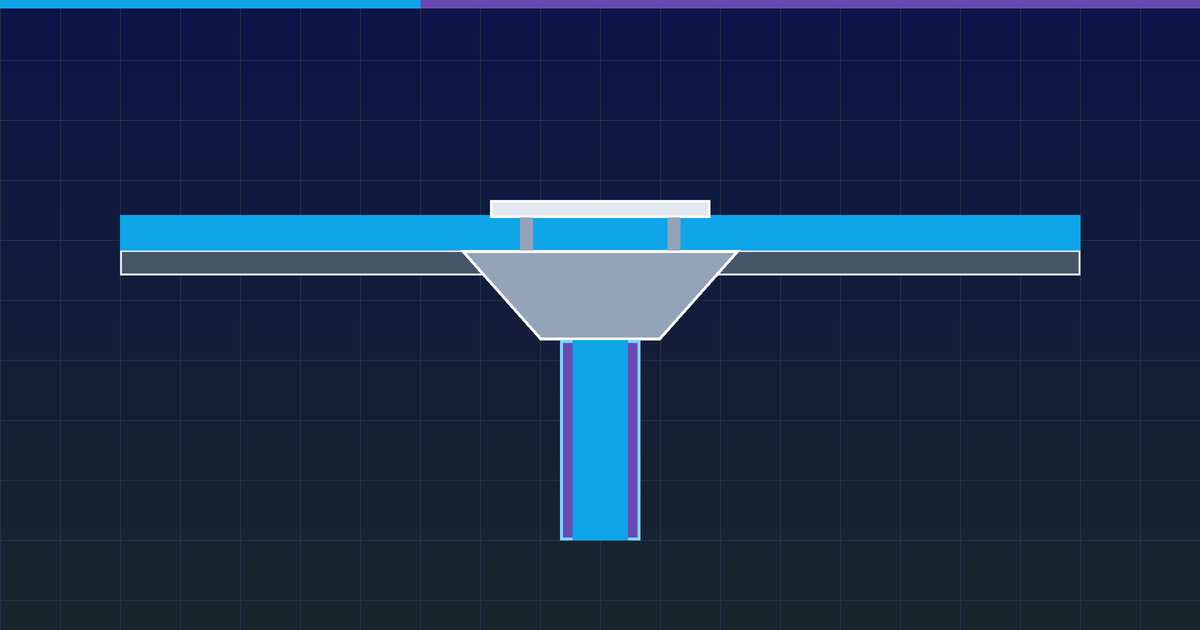
To sustain 6–8 m/s full-bore flow inside 0%-slope PE100 HDPE mains, Siphonet anti-vortex roof outlets rely on an integrated stainless-steel air baffle and radial guide vanes to strip rotation and seal out atmospheric air.

Three Hydraulic Functions of the Anti-Vortex Air Baffle

  1. Vortex Suppression: Radial ribs beneath the baffle cap break tangential water rotation, preventing an air-entraining funnel from forming even at high inflow rates.
  2. Early 15 mm Priming: As gutter water reaches 15 mm depth, the baffle lip submerges, sealing off air ingress and initiating full-bore siphonic suction.
  3. Debris & Leaf Screening: Paired with a removable protective strainer dome, the baffle geometry keeps construction grit and leaves out of the tailpipe without choking hydraulic intake.

Siphonet Anti-Vortex Roof Outlet Specifications (Official KB)

| Outlet Model | Max Design Flow (L/s) | Max Water Depth Before Outlet (mm) | Material Options | Compliance Standard | |---|---|---|---|---| | S56 | 12 L/s | 45 mm | SS304 / SS316L | EN 12056-3, ASME A112.6.9 | | S63 | 12 L/s | 45 mm | SS304 / SS316L | EN 12056-3, ASME A112.6.9 | | S75 / S90 | 25 L/s | 55 mm | SS304 / SS316L | EN 12056-3, ASME A112.6.9 | | S110 | 45 L/s | 85 mm | SS304 / SS316L | EN 12056-3, ASME A112.6.9 | | S125 | 60 L/s | 95 mm | SS304 / SS316L | EN 12056-3, ASME A112.6.9 |

Material & Installation Precision

Whether selecting SS316L for coastal salt-spray or SS304 for inland plants, proper installation is essential: the stainless insert plate must sit flush or ≤ 5 mm below the slab, with waterproofing membranes sealed tightly at the clamp ring before installing the air baffle.

Explore our Product Range or consult our Engineers Hub for outlet selection support.

Frequently Asked Questions

How does an air baffle trigger siphonic priming at 15 mm water depth?

Once gutter water reaches 15 mm, the horizontal air-baffle plate submerges and blocks atmospheric air from entering the outlet throat, allowing the falling water column to establish full-bore negative-pressure suction.

Why can't a standard gravity roof drain be used in a siphonic system?

Standard gravity drains lack engineered air-baffle geometry and anti-vortex vanes, so they continuously draw air into the pipework and cannot sustain EN 12056-3 negative-pressure flow.

What flow capacities do Siphonet anti-vortex roof outlets cover?

Siphonet's siphonic roof outlets range from 12 L/s (models S56 and S63) and 25 L/s (S75/S90) up to 45 L/s (S110) and 60 L/s (S125), engineered to EN 12056-3 and ASME A112.6.9.

Request a Complimentary Siphonic Hydraulic Review SIPHONET JOINT STOCK COMPANY (Tax Code: 0111350715) N07-B1 Dich Vong, Cau Giay, Hanoi, Vietnam | Tel: +84 913 381 683 Email: siphonetjsc@gmail.com | moitruongnuoc@gmail.com | Web: https://www.siphonet.com/contact-engineering


Engineering Guide

Related Articles in This Category

Explore more engineering articles in Engineering Guide

View all in category
Sponge City Policy Alignment for Southeast Asian Eco-Industrial Parks
Engineering Guide3 min read

Sponge City Policy Alignment for Southeast Asian Eco-Industrial Parks

Sponge City policy alignment for Southeast Asian eco-industrial parks requires industrial developers to control peak stormwater runoff, expand on-site retention, and integrate sustainable urban drainage systems (SuDS). EN 12056-3 siphonic roof drainage supports these mandates by reducing peak storm

Read article
Real-Time Rainfall Monitoring and Predictive Maintenance for Siphonic Roof Networks
Engineering Guide3 min read

Real-Time Rainfall Monitoring and Predictive Maintenance for Siphonic Roof Networks

Real-time rainfall monitoring and predictive maintenance for siphonic roof networks keep EN 12056-3 mega-roofs operating at peak 6–8 m/s self-cleaning capacity before tropical cloudbursts strike. By combining gutter water-level sensors, scheduled leaf-guard cleaning, and clamp-ring inspections, indu

Read article
Port and Container Terminal Warehouse Drainage Under Salt-Spray Exposure
Engineering Guide3 min read

Port and Container Terminal Warehouse Drainage Under Salt-Spray Exposure

Port and container terminal warehouse drainage under salt-spray exposure requires marine-grade corrosion resistance and high-capacity storm evacuation. By combining SS316L anti-vortex roof outlets with electrofusion PE100 HDPE piping, EN 12056-3 siphonic systems eliminate internal downpipes in high-

Read article
Mekong Delta & Southern Vietnam Industrial Flood Resilience with Siphonic Roofs
Engineering Guide3 min read

Mekong Delta & Southern Vietnam Industrial Flood Resilience with Siphonic Roofs

Mekong Delta and Southern Vietnam industrial flood resilience depends on rapid roof evacuation and controlled perimeter discharge during overlapping monsoon cloudbursts and high tides. EN 12056-3 siphonic roof drainage primes at 15 mm water depth, consolidates up to 80% of downpipes, and reduces pea

Read article
Siphonic Drainage for Distilleries and Compact Process Plants: Hinro Soju 25,000 m²
Engineering Guide3 min read

Siphonic Drainage for Distilleries and Compact Process Plants: Hinro Soju 25,000 m²

Siphonic drainage for distilleries and compact process plants—proven on the 25,000 m² Hinro Soju facility in Hung Yen—delivers 150–200 L/s per collector line while keeping dense fermentation and bottling halls free of internal downpipes. Using 0%-slope PE100 HDPE piping and SS316L/SS304 anti-vortex

Read article
Closed-Loop Rainwater Harvesting for Textile Dyeing and Finishing Factories
Engineering Guide3 min read

Closed-Loop Rainwater Harvesting for Textile Dyeing and Finishing Factories

Closed-loop rainwater harvesting for textile dyeing and finishing factories captures clean roof runoff through 0%-slope EN 12056-3 siphonic collectors to offset high municipal process-water consumption. By consolidating up to 80% of downpipes into centralized treatment cisterns, textile plants reduc

Read article



